


Hormonal skin: skincare for skin that feels out of balance


Your usual skincare suddenly does not seem to work the way it used to. Your skin feels drier, reacts more quickly and seems less firm. You may notice redness, tightness or blemishes around your chin and jawline. Sometimes, it all happens at once.
That is Hormonal skin.
This skin mood is common in women who experience skin changes during PMS, perimenopause, menopause or postmenopause. Hormonal fluctuations can affect your skin’s moisture balance, sebum production, skin barrier, elasticity and sensitivity. As a result, your skin may feel and react differently than you are used to.
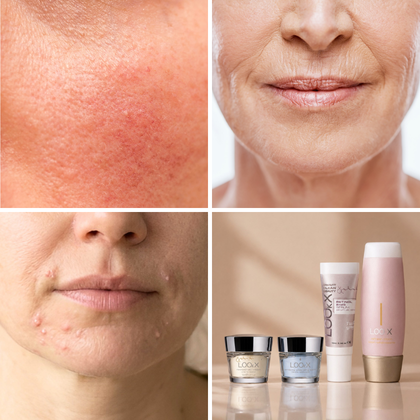
Hormonal skin is not always simply dry or sensitive. Symptoms can change and may even seem contradictory.
✓ Dryness or a tight feeling
✓ Sensitive or more reactive skin
✓ Redness and irritation
✓ Reduced comfort
✓ Loss of elasticity and firmness
✓ A dull or tired-looking complexion
✓ Blemishes around the chin and jawline
✓ Larger-looking pores or changes in sebum production
✓ Pigmentation spots
✓ Skin that suddenly feels out of balance
One week, dryness may be your main concern. At another time, you may notice more blemishes, warmth or redness. That is what makes Hormonal skin so recognisable and sometimes frustrating: your skin no longer follows one predictable pattern.
Hormones influence factors such as sebum production, moisture balance, collagen and elasticity. That means your skin may suddenly react differently during PMS, perimenopause and menopause: dry and sensitive one day, unsettled or oilier the next.
During and after menopause, declining oestrogen levels can also lead to less collagen, fewer natural skin lipids and increased moisture loss. As a result, your skin can feel tight and blemish-prone at the same time. That is why it is better not to automatically reach for heavy creams or aggressive products. Instead, choose a combination of hydration, barrier repair, soothing care, targeted skin improvement and daily protection.
The Hormonal skin routine has been developed for skin that changes under the influence of hormones and needs extra care, recovery and support for firmness.
 Step 1: Amazing cleansing balm - A gentle, rich cleanser that removes make-up, dirt and daily impurities. The balm helps prevent your skin from feeling dry or uncomfortable after cleansing.
  Step 2: Refresh lotion - Removes the final traces of cleanser, refreshes the skin and helps support its moisture balance. Your skin is then ready for the active skincare steps that follow.
  Step 3: Retinol2ndG serum - An intensive step for hormonal skin showing signs of skin aging, pigmentation or loss of firmness. The serum supports skin renewal and helps the skin look smoother and more even.
  Step 4: Retinol2ndG cream - Nourishes and protects the skin while supporting a firmer, smoother and more even-looking complexion. The cream is an accessible first step if you have not used products from the Retinol2ndG range before.
  Step 5: Retinol2ndG eye rescue - Targeted care for the delicate skin around the eyes. Helps address fine lines, loss of firmness and a tired-looking eye area.
  Step 6: Sun multi protection SPF50 - Protects your skin from daily UV exposure and helps prevent pigmentation spots and premature skin aging. Enjoy the sun!
 .png)
Hormonal skin is not a fixed condition. That is why you can adjust the basic routine depending on what your skin is showing you today.
 For loss of firmness
Add Firm+ structure peptide drops to your morning routine. This booster targets loss of firmness, volume and elasticity as well as uneven skin texture.
 For redness or irritation
Use Calm+ redness reset drops. This formula has been developed for skin that quickly becomes red, sensitive or reactive. Start slowly with once-daily use and increase gradually if your skin responds well.
 For oilier or blemish-prone skin
Choose Solution pore minimizer. This targeted treatment is especially suitable when enlarged pores, occasional inflammation or hormonal blemishes are your main concerns.
 For pigmentation spots - Add Brightening vitamin C intense drops. Vitamin C helps brighten a dull complexion and supports a more even-looking skin tone.
  For dryness and moisture loss
Use Hydra+ skin restore serum in the evening. Hyaluronic acid helps replenish moisture and leaves the skin looking plumper and feeling more supple and comfortable.
Hormonal skin may occasionally benefit from some extra recovery and care.
 Use Vitamin cocktail scrub to gently refresh dull, rough skin and refine its texture. Only use this step when your skin is calm and intact. Temporarily skip exfoliation if your skin is irritated, damaged or very red.
  The O2 relax eye & face mask gives your skin an intensive moment of care and helps tired, uncomfortable skin look fresh and relaxed again. These extra steps are also recommended as weekly additions to the Hormonal skin routine.


